home
Spacer Image
             
News & Event Releases         Calendar of Events        Publications        Media Center        speakers bureau         
Spacer Image
             
communications office        resources       Student News Forms        FEEDBACK       HOME         


Millsaps College Awarded Keck Grant

(02/04/08)

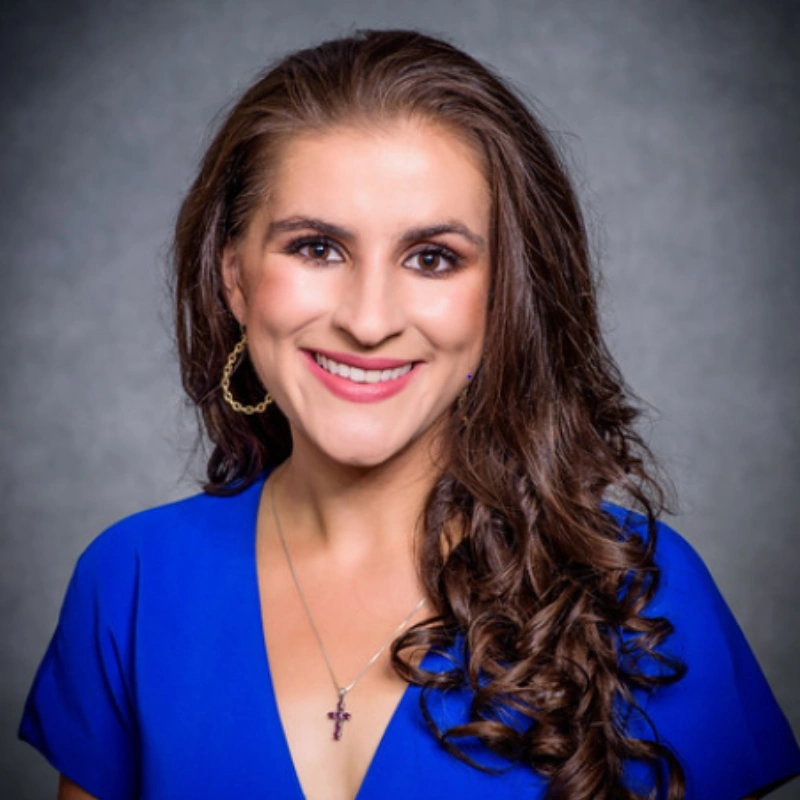
Millsaps College deans and faculty members involved in the formation of the new W.M. Keck Center for Instrumental and BioChemical Comparative Archeology include Dr. Sarah Lea McGuire, Dr. Timothy Ward, Dr. George Bey, Dr. Richard A. Smith and Dr. Michael Galaty.
Millsaps College deans and  faculty members involved in the formation of the new W.M. Keck Center for Instrumental and BioChemical Comparative Archeology include Dr. Sarah Lea McGuire,  Dr. Timothy Ward, Dr. George Bey, Dr. Richard A. Smith and Dr. Michael Galaty

Millsaps College has received a $400,000 grant from the W.M. Keck Foundation to launch a new research program and establish the W.M. Keck Center for Instrumental and BioChemical Comparative Archeology. The center will support pioneering interdisciplinary research to explore complex archeological questions using bioanalytical and biochemical techniques.

The grant, awarded by the nation’s leading private foundation for the support of science education and research at colleges and universities, will create a nationally distinctive undergraduate research program that includes funds for constructing and equipping a new science lab, faculty and student stipends and faculty and student travel and research expenses.

"This will greatly expand and deepen our students’ understanding of how science is accomplished across diverse disciplines and allow them to participate in cutting edge, cross-disciplinary research," said Dr. Richard A. Smith, senior vice president and dean of Millsaps College.

The Keck grant will cover nearly one-half of the total cost of the $818,000 project to give Millsaps students and faculty the tools to expand understanding of Old and New World cultures. Specifically, researchers expect to make significant contributions to archaeological study of the Bronze-Iron Age Illyrians in Albania (2000 B.C.-A.D. 0) and the Formative Maya in Yucatán, Mexico (900 B.C.-A.D. 250).

"This is a tremendous honor for Millsaps to be chosen from such a competitive field of liberal arts colleges nationwide," said President Frances Lucas. "Our faculty and staff have combined their expertise and put in many hours to create a truly synergistic program, and we are grateful to the Keck Foundation for its generous support of this research opportunity for our undergraduates."

The W.M. Keck Center will complement Millsaps' laboratory research programs and its two distinctive archaeological field research programs in Mexico and Albania. The 4,500-acre Helen Moyers Biocultural Reserve in Mexico's Yucatán Peninsula focuses on a previously unexplored and pristine forest system in the Northern Maya Lowlands, and the Shala Valley Project conducts archaeological research in northern Albania, where an interdisciplinary team of scholars is working to produce a record of the region’s cultural resources.

Most importantly, the W.M. Keck Center will model the collaborative environment in which revolutionary scientific breakthroughs occur, demonstrating to students the connected nature of scientific inquiry.

"It is rare for a college of our size to have internationally recognized scholars in biology, chemistry and anthropology, and unheard of for those scholars to alter their research programs in a manner that makes each faculty's research dependent upon the other's," said Dr. Timothy Ward, professor of chemistry, associate dean of science and project director.

"The research performed and the questions that will be answered are by far greater than what any individual faculty could ever hope to accomplish alone."

"Getting a grant like this really starts with a great idea, and building a program that combines field and laboratory experience together for students was a great idea," said Dr. Michael Galaty, associate professor of anthropology and director of the Shala Valley Project.

"We will be able to analyze various kinds of artifacts from Albania and Yucatán in order to learn something about the foundations of cultural complexity in both places. This is truly path-breaking interdisciplinary research."

Logistically the program will develop over a three-year period. Year one (2008-2009) will include laboratory renovations, initial field data collection and planning curricular changes. Year two (2009-2010) will include equipment installation, continued field sampling, beginning laboratory analysis and approval of course redesign. Year three (2010-2011) will include completion of all equipment acquisition, continued field sampling and analysis, launching new and revised course implementation and development of initial papers and presentations.

"For students to have the opportunity to work in the field and in the lab in a way that integrates multiple disciplines is rare," said Dr. Sarah Lea McGuire, professor of biology and director of the Molecular Biology Laboratory and Laboratory Team Leader for the new center. "The merging of these disciplines is unique and a superb model for scientific thought."

Millsaps plans to begin putting students in the field this summer, and construction of the Keck lab in Olin Hall will begin this spring. The Center will celebrate its inaugural year with a series of lectures on bio-chemical approaches to the study of various ancient artifacts.

Other Millsaps faculty involved in the grant are Dr. George Bey, associate dean of international education, professor of anthropology and director of the Maya/Yucatán Field program; Dr. Markus Telkamp, assistant professor of biology; Dr. Wolfgang Kramer, assistant professor of chemistry; Stan Galicki, assistant professor of geology; and Tomás Gallareta Negrón, Millsaps Scholar of Maya Studies.


News Releases


Spacer Spacer Spacer
Spacer
         
Spacer
Spacer Spacer Spacer